How to buy a large lot of oak lumber: a buyer's checklist
Dimensions, converting boards to cubic metres, splitting the purchase into lots, inspection and transport. A practical list of questions to close before signing a contract for oak lumber in wholesale quantities.
Przeczytaj ten wpis po polsku · Diesen Beitrag auf Deutsch lesen
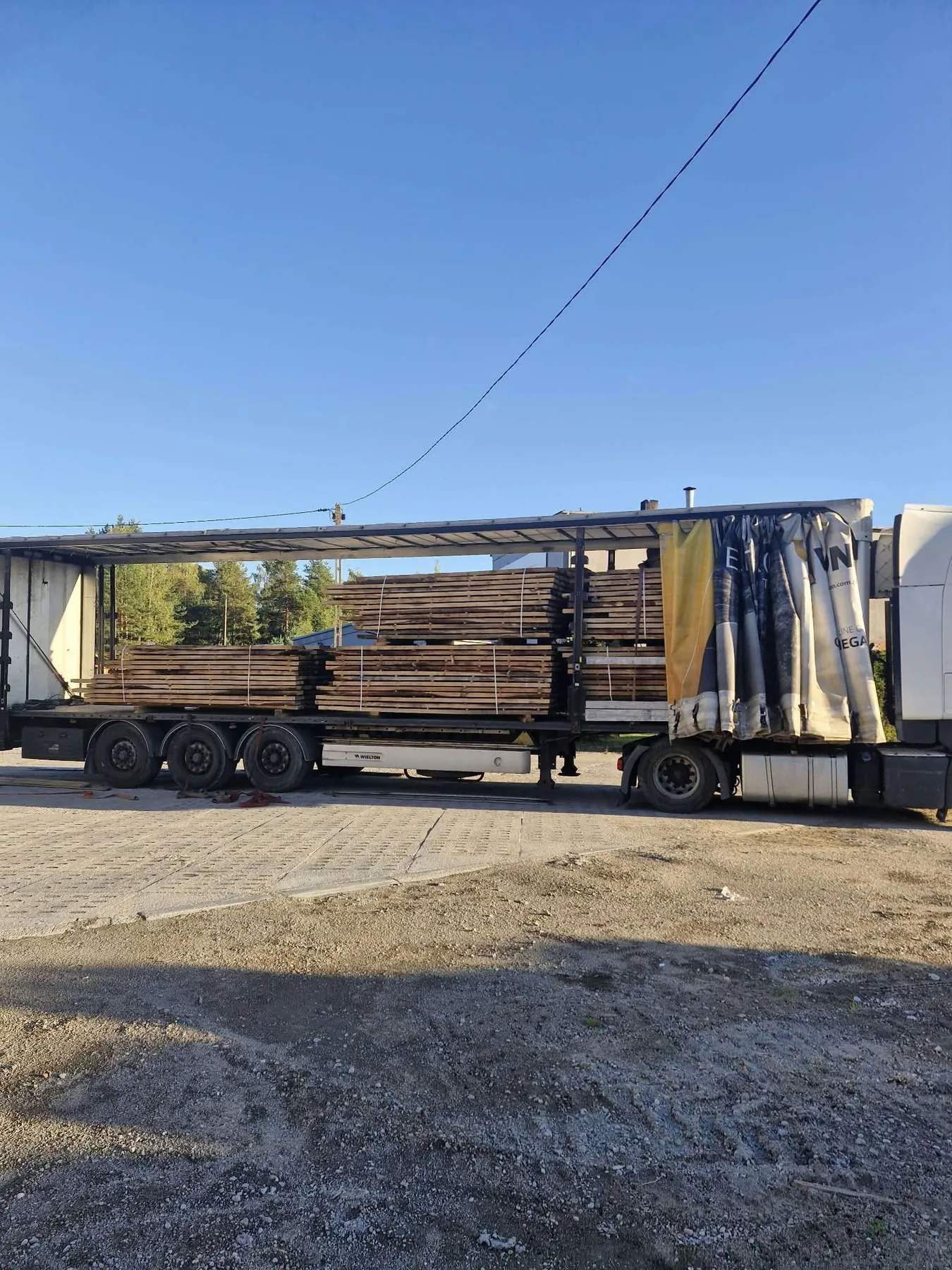
Buying several hundred, let alone several thousand cubic metres of oak lumber is a logistics and financing project, not an ordinary order. Below is a list of matters that experienced buyers close before signing. The numerical examples use the parameters of the ARGADO offer (thicknesses 32-55 mm, widths 100-400 mm, lengths 1-6 m), but the list is universal.
1. Dimensions and what follows from them
Oak lumber is sold by the cubic metre, but it is turned into parts of specific lengths and sections. So the first question is not "how many m³" but "what is the size distribution".
- Thickness decides the use: 32 mm is typical furniture and front stock, 40-45 mm goes to table tops and stair treads, 50-55 mm to windows, doors and heavy structural parts.
- Width of 100-400 mm covers both narrow boards for lamellas and strips and wide ones for tops and window sills. A high share of wide boards raises the value of a lot for some buyers and is irrelevant to others.
- Length of 1-6 m: short pieces go into furniture parts and flooring, long ones into stairs, joinery and structures. Ask what the length distribution in the stacks looks like.
A quick conversion: a 50 × 200 mm board 3 m long is 0.03 m³. One cubic metre is about 33 such boards. At 32 × 150 mm and 2 m long (0.0096 m³) a cubic metre already holds more than 100 pieces. This matters when you plan unloading and storage.
2. The whole or in lots
The ARGADO offer allows the sale of the whole quantity (about 35,000 m³) or of lots. Three things decide the size of a first purchase:
- Your own processing and kiln capacity. Material at 15-20% moisture content is usually dried further to 8-10% before furniture or flooring production. The capacity of your kilns sets a sensible pace of collection.
- Storage space. Lumber must sit on stickers, under a roof, with airflow. A cubic metre of stickered lumber takes visibly more room than a cubic metre of solid wood.
- Cash flow. Buying in lots spreads the payments and lets you test the material from the first delivery in production before ordering more.
Good practice: a representative first lot (various thicknesses and lengths), settlement, and only then a schedule for further collections.
3. Inspection before purchase
At this scale an on-site inspection is not a luxury but the standard, and the ARGADO offer provides for it explicitly. Where to spend your time:
- Moisture content: measure dozens of boards from different stacks and different depths, not only the top layer.
- Grade and defects: knots, end checks, sapwood, spiral grain, bow and twist. Judge the worse face. More on grades in our post on A/B labels.
- Storage conditions: stickers, top cover, clearance from the ground.
- Documentation and photos: the offer states they are available. Ask for them before you travel, so that on site you only confirm the condition.
For very large lots buyers often commission an independent inspection company. It costs a fraction of a percent of the transaction value and is usually a condition of financing or insurance.
4. Transport
The ARGADO offer includes the option of arranging international transport. Whoever organises it, count the loads in advance. Seasoned oak at 15-20% moisture weighs roughly 750-800 kg per cubic metre, so a standard semi-trailer (payload around 24 t) takes about 30 m³. A 300 m³ lot is about 10 trips; the whole offer means well over a thousand. For export outside the European Union add containers (a 40 ft container usually takes 20-25 m³ of oak lumber because of the weight limit), customs clearance and the timber origin documents required by the destination country.
Delivery terms (Incoterms), collection dates and responsibility for loading are agreed individually in the contract. The earlier these points enter the conversation, the fewer surprises at the first trip.
5. Contract and payment
Finally, a few points worth having in writing: the lot specification (species, grade, dimensions, moisture content, quantity), the method of measuring quantity (nominal or actual m³, with or without bark for unedged stock), the inspection report as an annex, the collection schedule, payment terms tied to stages, and responsibility for the material until loading.
If you have questions about a specific quantity or use, the enquiry form on the offer page reaches us directly. State the planned quantity and what the material is for, and the answer will be specific.