Oak lumber grades: what "mix A/B" means
The letters A, B and C on lumber offers are not a single standard but the language of trade. What usually sits behind grades A and B, how that differs from sorting to EN 975-1, and how to buy a "mix A/B" lot without surprises.
Przeczytaj ten wpis po polsku · Diesen Beitrag auf Deutsch lesen
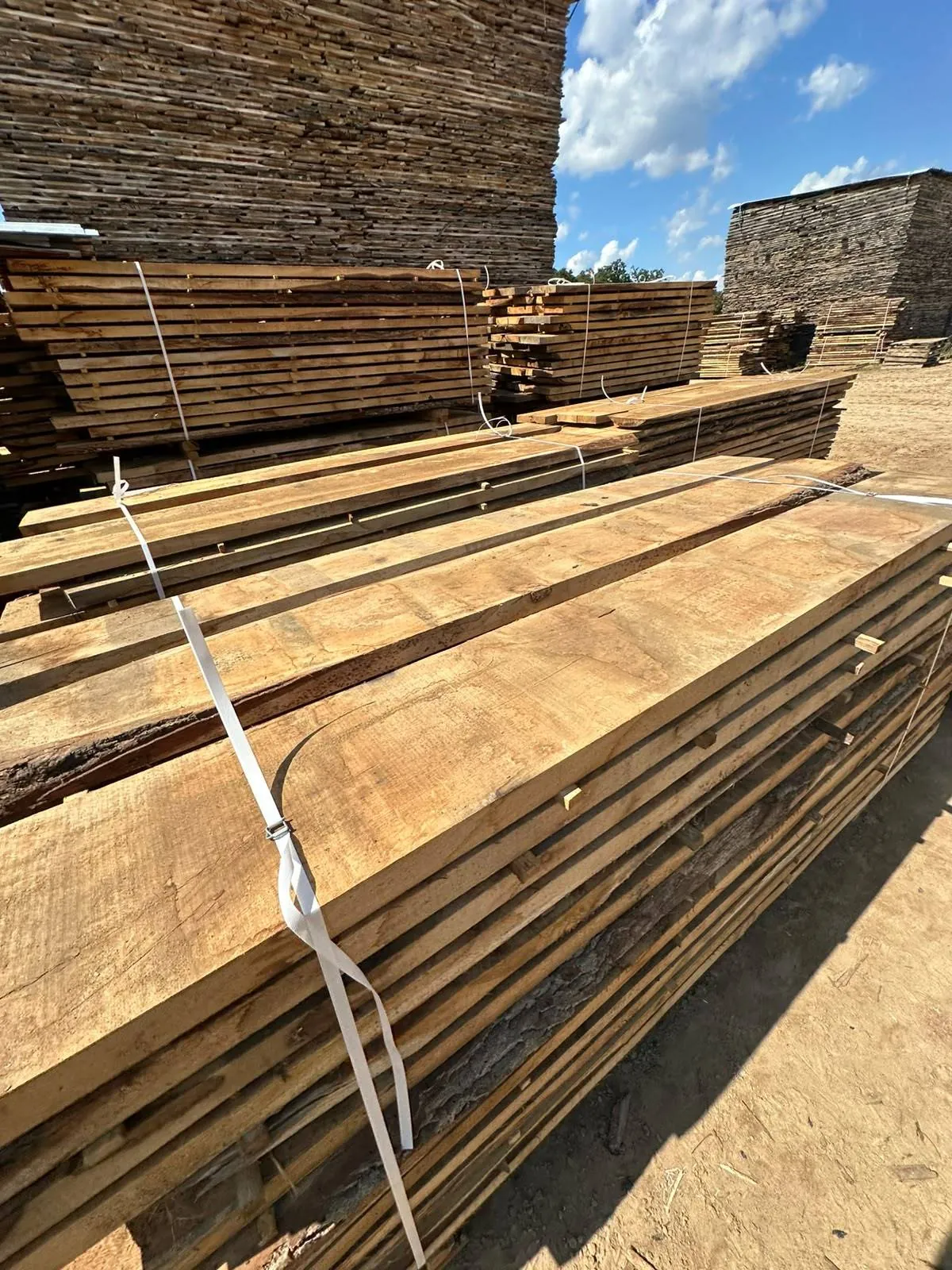
Almost every oak lumber offer uses letters: A, B, C, sometimes AB or "mix". Buyers in the trade understand each other instantly, but for anyone buying a large lot for the first time it is worth spelling out. The short version: letter grades are a commercial convention, not a standard, which is exactly why a sample and an inspection matter so much in bigger deals.
Where the letters come from
In Europe, formal grading of hardwood sawn timber is described by EN 975-1 (oak and beech). It uses classes from Q-F1a (the cleanest) to Q-F4, separately for unedged and edged boards, with criteria such as the share of clear surface, size and number of knots, checks, sapwood and spiral grain. In day to day trade this nomenclature is rarely used. Simpler labels have taken over:
- Grade A: boards that are largely clear, without significant knots, with even colour and straight grain. Material for furniture fronts, table tops, visible stair parts, premium joinery.
- Grade B: small sound knots allowed, slight colour variation, minor end checks or sapwood on an edge. Material for furniture frames, "natural" and "rustic" flooring grades, less exposed parts or stock meant for further cutting.
- Grade C: knotty, rustic, with more defects to cut out. We leave it aside here, as offers in this grade follow a different pricing logic.
The line between A and B runs in different places at different companies. One seller calls a board with a single knot over 3 metres grade B; another puts a board with slight blue stain in the same pile. So a grade on its own is only the starting point of a conversation.
What "mix A/B" means
A "mix A/B" offer means the lot contains boards of both grades without prior sorting into separate bundles. For the buyer this is usually good news on price, since the seller charges no premium for clean sorting and a buyer with their own cutting line selects the material for specific parts anyway. Two questions still need asking:
- What is the approximate share of each grade. It cannot always be stated to the percent, but the seller should be able to show representative bundles.
- Is the lot uniform across the whole stack. In large quantities some piles can be visibly better than others. An inspection should cover several randomly chosen spots, not the first bundle by the road.
In the ARGADO offer the material is described as oak in mix A/B grades, in thicknesses of 32-55 mm, widths of 100-400 mm and lengths of 1-6 m, available as a whole or in lots. The offer also provides for an inspection before purchase and access to documentation and photos, which is exactly what you need to judge the grade with your own eyes.
How to judge the grade in the yard
A few practical tips for an inspection:
- Bring a moisture meter and a tape measure. Grade is not only about knots; the width of the clear zone between defects decides whether you can cut the part length you need.
- Look at both faces. Sellers stack bundles best face up, which is natural, but the grade is set by the worse face.
- Watch the sapwood and the ends. Sapwood (the paler outer zone of the log) in oak is not durable and goes to waste in most applications. End checks after seasoning are normal, but their length affects the real yield.
- Calculate yield, not price per m³. Grade B at a lower price can beat grade A if you cut short parts anyway. What counts is the cost per cubic metre of finished blanks.
If you want to discuss a specific lot, the enquiry form on the offer page lets you state the quantity and intended use straight away.